

A deal closes on Friday. On Monday, Operations discovers that the customer expected a different delivery date and a feature nobody scoped. The problem is rarely that the team needs another celebratory notification. It needs an explicit transfer of what was promised, what is ready and who now owns the customer’s next step.
Separate a sales outcome from delivery readiness
Sales records explain the opportunity and commercial context. Delivery work needs a clear scope, dependencies and responsible people. These records should be connected, but their states mean different things. Treat “won” as an event that starts a readiness check rather than silently assuming every operational requirement is complete.
If a required document, customer contact or internal approval is missing, make that visible. A hidden gap is likely to become an urgent message later. The handoff should allow Operations to say what is missing without making the customer repeat a conversation they already had with Sales.
Capture the promises that change the work
| Area | What the receiving team needs |
|---|---|
| Customer objective | What success means to this customer |
| Agreed scope | Deliverables and important exclusions |
| Customer contacts | Who can answer questions and accept next steps |
| Dates | Confirmed commitments and dependencies |
| Open questions | What is unresolved and who must decide |
| Source documents | Where approved references can be found |
| Ownership | Delivery owner, backup and escalation path |
Distinguish a confirmed date from a target. “Customer would like to launch next week” is useful context; it is not the same as a commitment the delivery team accepted. If a date depends on the customer supplying information, record that dependency next to the date so it survives a shift change.
Make acceptance explicit
The receiving owner should confirm that the summary is understandable and the next action can be taken. This need not be a long meeting. It can be an acknowledgement in the agreed workflow with a short list of missing items. What matters is that the handoff has a clear result rather than disappearing into a group chat.
For a hypothetical onboarding, acceptance might mean that the named delivery owner has the customer contact, setup requirements and first meeting date. If access is missing, create an owned action to obtain it. Do not mark the work ready just because a task exists somewhere with no responsible person.
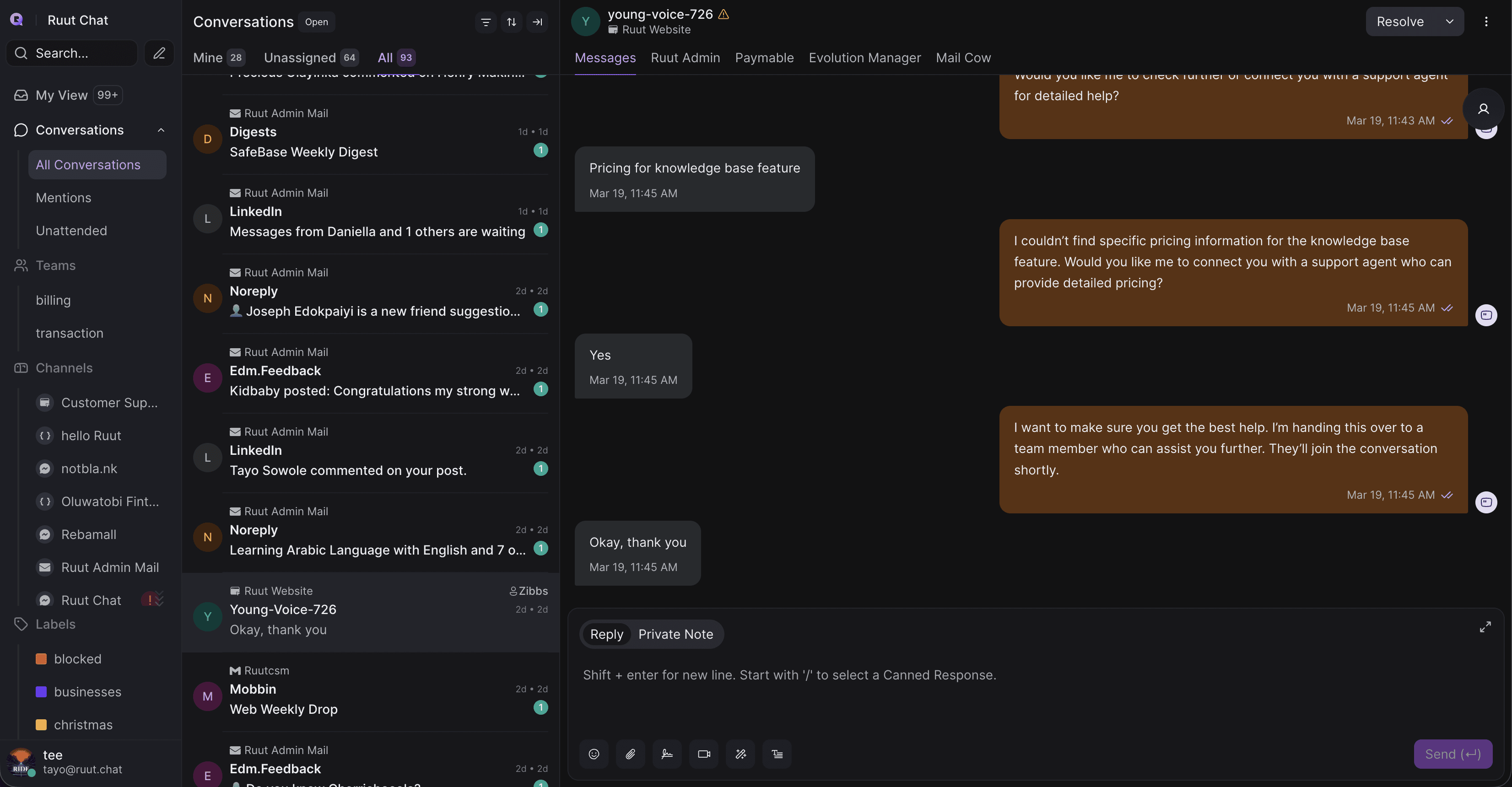
Send a customer-facing introduction
This message is a summary of the process you actually agreed, not an opportunity to make a fresh promise. Check that the named owner is available and that the customer’s contact preferences are respected. Keep internal discussion about capacity or unresolved approvals out of the customer message.
Connect context without oversharing it
A shared customer workspace can reduce searching across inboxes and spreadsheets. That does not mean everyone needs every attachment or internal note. Keep the delivery context relevant to the task, confirm the customer record match and point to the authoritative document rather than copying sensitive material into several places.
When evaluating Ruut, test the contact context and the sales or delivery workflow available in your setup. Ask the receiving teammate to find the next commitment without help from the salesperson. That simple exercise often reveals whether the connection is useful in practice.
Review the handoffs that needed rescue
Once a week, sample work that started late, required repeated clarification or generated a complaint about a promise. Identify which field or acceptance step would have prevented the problem. Improve that part of the checklist instead of adding a new mandatory field for every unusual event.
Continue with setting up ownership in a shared inbox for a practical next step.
Separate a sale from a ready-to-deliver handoff
A customer saying yes is not always enough for operations to begin. In a sample onboarding case, ask sales to supply the agreed scope, verified billing status, customer decision-maker and first delivery date. Let operations accept the handoff or return it with a named missing item. This prevents a closed deal from concealing work that nobody has accepted.
Evaluating software for this workflow? Read Ruut vs Zoho Desk for package considerations and a practical demonstration checklist.
Cover artwork: AI-generated editorial imagery for Ruut. People and settings are illustrative; product screenshots in this guide show the actual Ruut interface.
Frequently asked questions
Should Sales stop participating after a deal closes?
Not automatically. Define which commercial or relationship questions remain with Sales and who owns delivery.
Does a checklist replace a handoff conversation?
No. It provides a reliable starting point. Complex or disputed scope may still need a discussion.
Who should update a changed commitment?
The owner authorised to agree it should update the source record and inform affected teams and the customer.



No comments yet.